Simplifying Solo RPGs
Your Essential d6 Tables for an Engaging Experience

For many, the world of role-playing games (RPGs) can be both thrilling and overwhelming. The prospect of navigating intricate rules and mechanics can deter new players, especially those venturing into solo play. Fortunately, the concept of utilizing d6 tables allows for a streamlined approach, making the gameplay not only more accessible but also immersive. This article combines various d6 tables designed to simplify combat, skill checks, encounters, exploration, and storytelling elements, enabling you to dive into your solo RPG adventure with ease.
The Power of d6 Tables
By employing a straightforward rolling system, players can replace complex mechanics with simple outcomes determined by a single roll. Each table provides a unique framework for resolving actions, crafting narratives, and introducing encounters, thereby enriching your gameplay. Here’s a compilation of essential d6 tables tailored for solo RPG experiences.
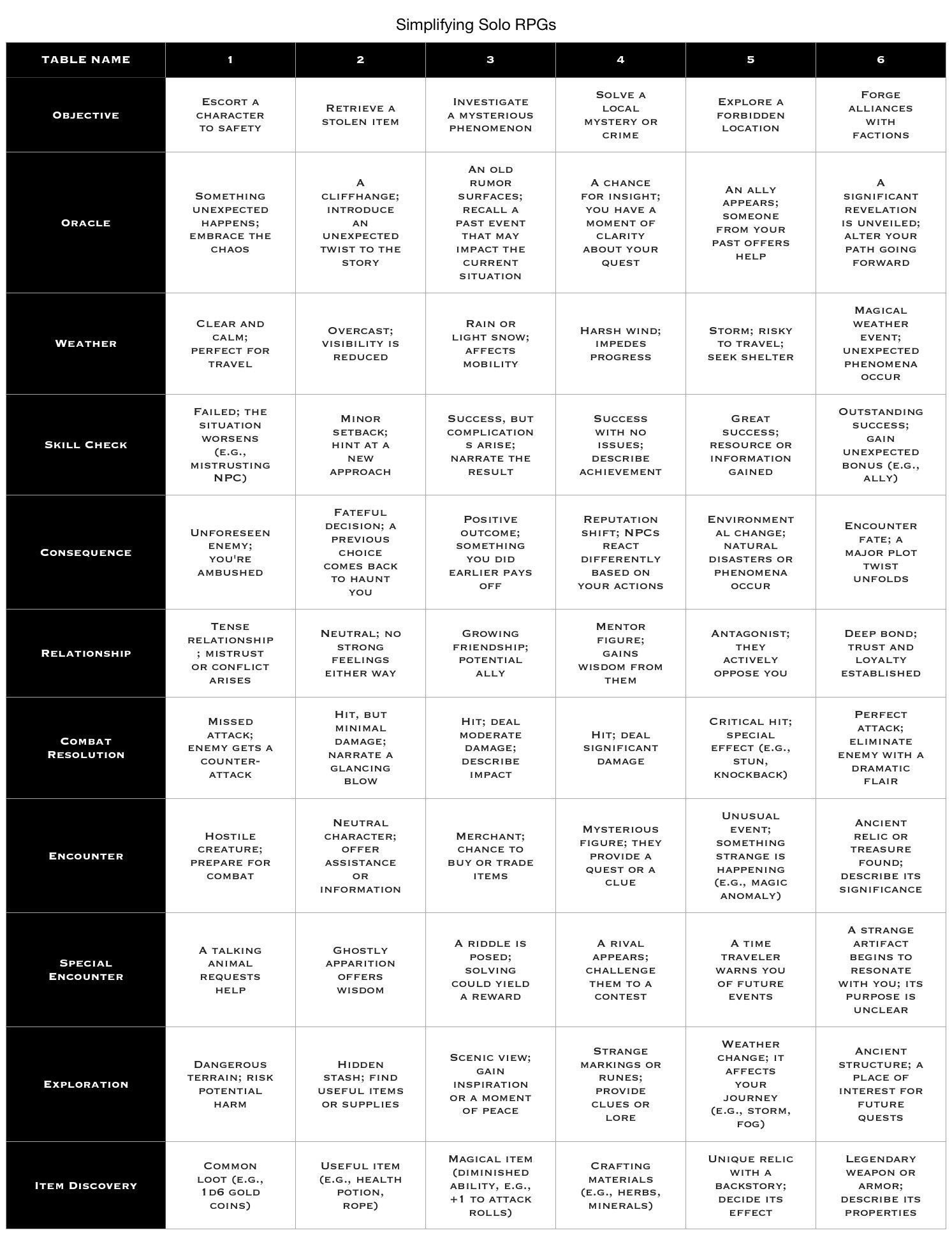
1. Combat Resolution Table
Combat can often feel daunting, but this table helps simplify the process:
1 Missed attack; enemy gets a counter-attack.
2 Hit, but minimal damage; narrate a glancing blow.
3 Hit; deal moderate damage; describe impact.
4 Hit; deal significant damage.
5 Critical hit; special effect (e.g., stun, knockback).
6 Perfect attack; eliminate enemy with a dramatic flair.
2. Skill Check Table
Streamline skill challenges with this quick reference:
1 Failed; the situation worsens (e.g., mistrusting NPC).
2 Minor setback; hint at a new approach.
3 Success, but complications arise; narrate the result.
4 Success with no issues; describe achievement.
5 Great success; resource or information gained.
6 Outstanding success; gain unexpected bonus (e.g., ally).
3. Encounter Table
This table randomly generates encounters, from hostile enemies to friendly characters:
1 Hostile creature; prepare for combat.
2 Neutral character; offer assistance or information.
3 Merchant; chance to buy or trade items.
4 Mysterious figure; they provide a quest or a clue.
5 Unusual event; something strange is happening (e.g., magic anomaly).
6 Ancient relic or treasure found; describe its significance.
4. Oracle Table
The oracle table can steer your narrative direction when you’re uncertain:
1 Something unexpected happens; embrace the chaos.
2 A cliffhanger; introduce an unexpected twist to the story.
3 An old rumor surfaces; recall a past event that may impact the current situation.
4 A chance for insight; you have a moment of clarity about your quest.
5 An ally appears; someone from your past offers help.
6 A significant revelation is unveiled; alter your path going forward.
5. Exploration Table
What do you find while navigating your world? Use this table for discoveries:
1 Dangerous terrain; risk potential harm.
2 Hidden stash; find useful items or supplies.
3 Scenic view; gain inspiration or a moment of peace.
4 Strange markings or runes; provide clues or lore.
5 Weather change; it affects your journey (e.g., storm, fog).
6 Ancient structure; a place of interest for future quests.
6. Item Discovery Table
Determine what useful items you might stumble upon:
1 Common loot (e.g., 1d6 gold coins).
2 Useful item (e.g., health potion, rope).
3Magical item (diminished ability, e.g., +1 to attack rolls).
4 Crafting materials (e.g., herbs, minerals).
5 Unique relic with a backstory; decide its effect.
6 Legendary weapon or armor
7. Consequence Table
Introduce meaningful consequences for your actions with this table:
1 Unforeseen enemy; you’re ambushed.
2 Fateful decision; a previous choice comes back to haunt you.
3 Positive outcome; something you did earlier pays off.
4 Reputation shift; NPCs react differently based on your actions.
5 Environmental change; natural disasters or phenomena occur.
6 Encounter fate; a major plot twist unfolds.
8. Relationship Table
Strengthen the depth of your world by defining relationships with NPCs:
1 Tense relationship; mistrust or conflict arises.
2 Neutral; no strong feelings either way.
3 Growing friendship; potential ally.
4 Mentor figure; gains wisdom from them.
5 Antagonist; they actively oppose you.
6 Deep bond; trust and loyalty established.
9. Objective Table
Set your goals with this table, providing clear paths for your adventures:
1 Escort a character to safety.
2 Retrieve a stolen item.
3 Investigate a mysterious phenomenon.
4 Solve a local mystery or crime.
5 Explore a forbidden location.
6 Forge alliances with factions.
10. Weather Table
Change the dynamics of your journey with weather conditions:
1 Clear and calm; perfect for travel.
2 Overcast; visibility is reduced.
3 Rain or light snow; affects mobility.
4 Harsh wind; impedes progress.
5 Storm; risky to travel; seek shelter.
6 Magical weather event; unexpected phenomena occur.
11. Special Encounter Table
Create memorable moments with unique, one-off encounters:
1 A talking animal requests help.
2 Ghostly apparition offers wisdom.
3 A riddle is posed; solving could yield a reward.
4 A rival appears; challenge them to a contest.
5 A time traveler warns you of future events.
6 A strange artifact begins to resonate with you; its purpose is unclear.
Conclusion: Enhancing Your Solo RPG Experience
These d6 tables provide a comprehensive toolkit for simplifying various mechanics typically found in RPGs, particularly for solo players. By utilizing a core rolling system, you can easily engage with combat, skill checks, encounters, exploration, and more without feeling overwhelmed by complex rules.
With each roll, the world unfolds before you, offering fresh challenges and opportunities to narrate your unique adventure. Whether you’re facing off against fearsome foes, navigating treacherous terrains, or forging bonds with intriguing characters, these tables enhance your storytelling possibilities.
So, gather your dice, dive into your imagination, and embark on an unforgettable solo RPG journey. The adventure awaits!
Nice d6 tables to keep things simple.
This is a great resource. Thank you. It's cool that you have all of the tables together. It makes navigating easy (no flipping to find the right table)